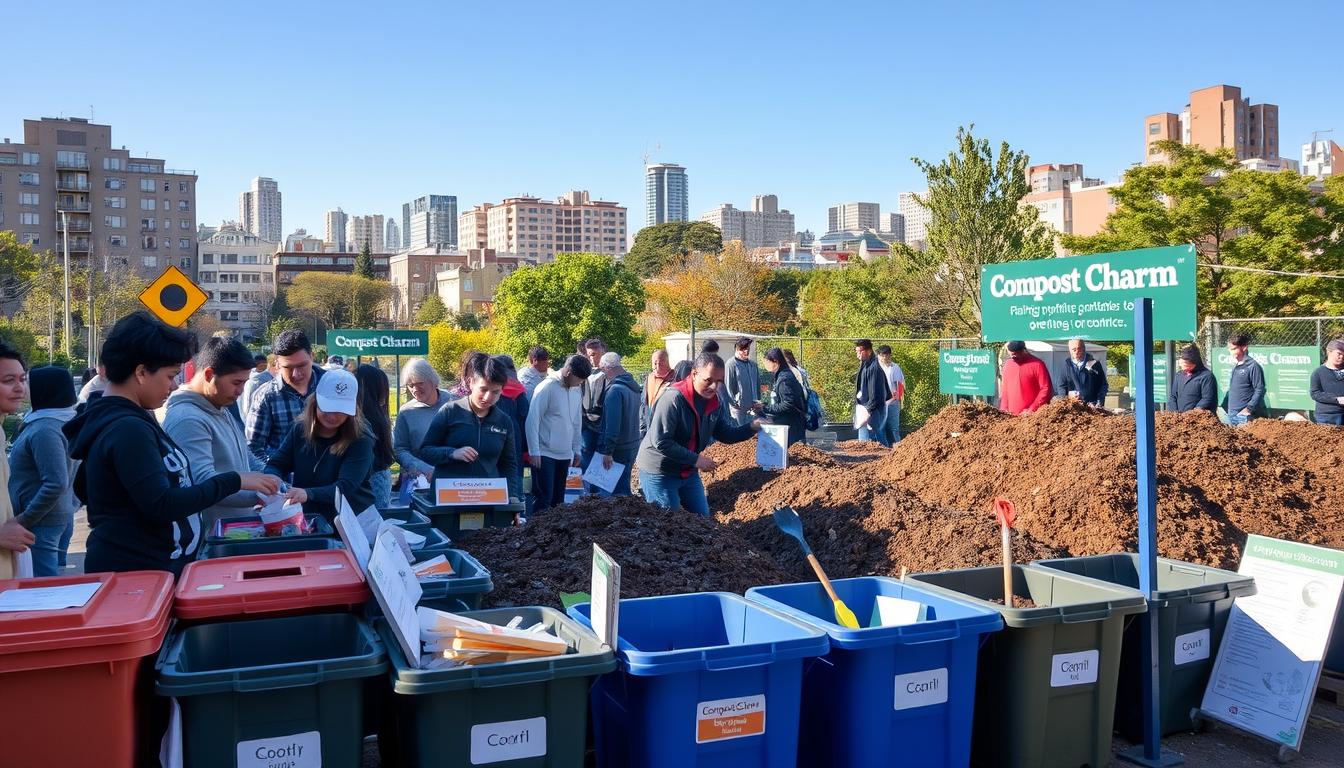
Community composting turns food scraps and yard waste into soil. This guide is for anyone wanting to start a composting hub.
It’s about making compost locally, getting people involved, and seeing real results.
Many U.S. cities don’t have good ways to deal with food waste. A neighborhood hub can be a solution.
This article will help you start a hub at a school, garden, or empty lot.
This guide gives you honest advice and resources like the Institute for Local Self-Reliance.
You’ll learn about planning, operations, and how to get started. It’s all about making your hub a reality.
Key Takeaways
- Community composting helps divert food scraps and builds soil for local green spaces.
- You can launch a hub with partners like schools, gardens, or municipal programs.
- Start small, set clear goals, and use proven resources such as ILSR and the US Composting Council.
- Plan for permitting, volunteer training, and contamination prevention from day one.
- Measure tons diverted, compost produced, and participant households to track success.
Why community composting matters for cities and neighborhoods
Community composting helps neighborhoods reduce organic waste and improve local soils.
By joining or starting a hub, you connect household scraps to gardens and farms. This strengthens community sustainability and supports city waste management efforts.
Environmental benefits: methane reduction and carbon storage
Keeping food and yard waste out of landfills cuts methane emissions, which harm the climate.
Compost adds carbon and organic matter to soil, improving its structure and water retention.
These benefits enhance urban composting by storing carbon and reducing chemical use.
Social value: civic engagement, job training, and inclusion
Hubs become centers for learning and community building.
Training programs like Master Composter or courses from the US Composting Council build local skills.
City composting projects offer job training, creating opportunities for youth and marginalized residents.
Economic and local food system impacts
Finished compost feeds community gardens, school plots, and urban farms, reducing fertilizer costs and improving harvests.
Small-scale operations can sell compost or offer services, creating jobs and boosting local economies.
The EPA supports sustainable food management, showing public interest in reducing waste.
Community composting and city composting are practical ways to meet policy goals and grow local climate-smart soil care.
Setting clear goals and choosing the right composting model
First, figure out why you want to start a composting hub.
Do you aim to teach people, reduce landfill waste, create soil for gardens, or build a business that hires locals?
Your goals will guide everything from staff to partnerships.
Define objectives
Make specific goals you can measure. For example, aim to divert a certain amount of waste, host workshops monthly, or create jobs.
Clear goals help with fundraising and measuring success.
Compare models
Drop-off hubs let people bring their compost to a central spot. They’re great for sunny spots like gardens.
On the other hand, pick-up services use bikes or vans to collect from homes. These are better for busy areas.
School or garden sites offer hands-on learning and soil for projects. Each model has its own needs.
For example, drop-off hubs need good hours and signs. Pick-up services need routes and safe transport.
Choosing the right model helps your project succeed. It makes it easier for people to join in.
Decide scale
Composting projects can be small, like a backyard co-op, or big, like a city-wide effort. School programs focus on teaching.
City projects need to work with local plans.
Small projects need less money but can test ideas fast. Big projects need more staff and money.
Think about growing your project as you start.
Match your goals, model, and size to what your community needs.
This way, your composting project will be trusted and used. A solid plan makes your project a lasting asset.
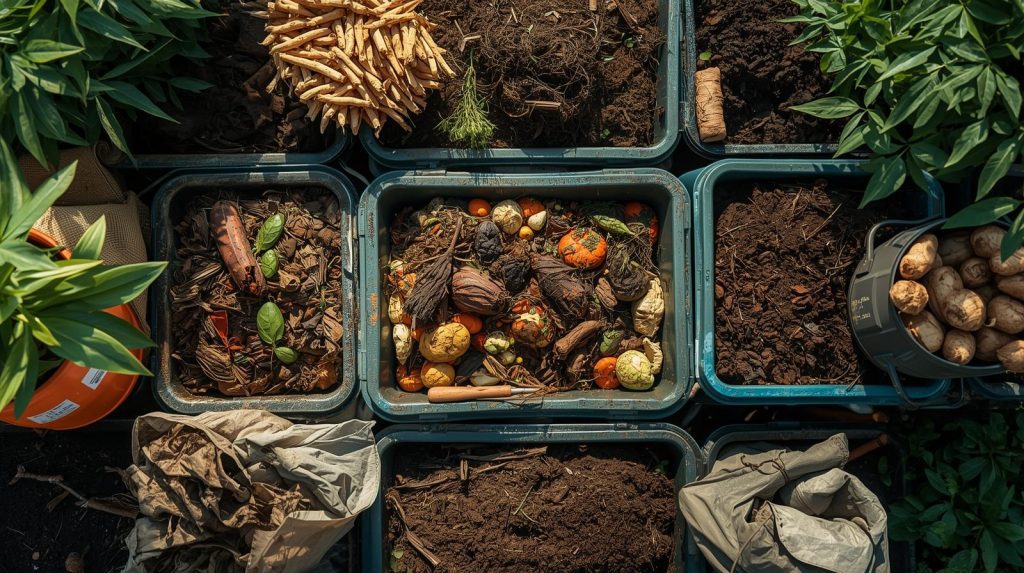
How to start a community composting hub in your city
Starting a hub is all about simple planning. It’s like a roadmap from idea to action.
Focus on helping the community and set goals that meet local needs.
Initial planning checklist: training, site, partners, equipment, funding
First, find training for your team. Master Composter workshops and US Composting Council courses are great.
They teach you how to compost safely and well.
Next, choose a good location. Look at community gardens, schools, or vacant lots. Make sure it’s allowed and easy to get to.
Get partners like local gardens and schools involved early.
Make a list of what you need: bins, tools, and signs. Look for funding from grants and local support.
This will help with startup costs.
Decide what fits your goals best. A 501(c)(3) nonprofit is good for grants and trust.
A cooperative offers shared ownership. A B Corporation balances mission and income. A municipal program makes things easier.
Each choice affects how you run things. Look at resources like the Sustainable Economies Law Center for help.
Drafting a basic business or project plan focused on sustainability and community benefit
Write a one-page summary. Include goals, who you’ll help, how you’ll collect waste, and your budget. Don’t forget about training and when things will happen.
Focus on using compost locally and involving volunteers. Use guides from ILSR to help with planning and budgets.
Keep your plan open to changes.
Regularly review and improve it. This way, your composting hub can grow and help your community.
Training, operations, and compost quality control
Starting a community composting hub needs people who understand composting and how it works.
A trained operator makes sure things run smoothly and builds trust in the community.
Use composting resources to create training that fits your needs.
Operator training and available programs
First, decide who will manage the composting day-to-day. Master Composter training is great for both volunteers and staff.
It teaches them the skills they need.
The US Composting Council and ILSR webinars offer courses on safe composting practices.
Core composting basics everyone should know
Composting needs oxygen to work. Aim for a mix of brown and green materials to keep it balanced.
Keep the pile moist and turn it often to speed up decomposition.
Monitoring: turning, moisture, and temperature
Turning the compost keeps it aerated and controls quality. Check moisture by squeezing the compost.
Use a thermometer to track temperature and manage curing.
Standard operating procedures to avoid problems
Make clear rules for what can be composted. Include rules for source separation and labeling.
Train staff to reject plastics and certain papers.
Odor, pests, and contamination response
To avoid odors, add carbon and turn the compost more often. Use cover material to deter pests.
If problems arise, isolate the batch and remove contaminants.
Operational checklists and volunteer roles
Use checklists for daily tasks like intake and turning. Assign roles to volunteers.
Teach them to make quick decisions when problems come up.
Resources for ongoing learning and support
Keep a library of composting resources for volunteers. Pair new volunteers with trained ones.
Regular training sessions help maintain quality and reduce mistakes.
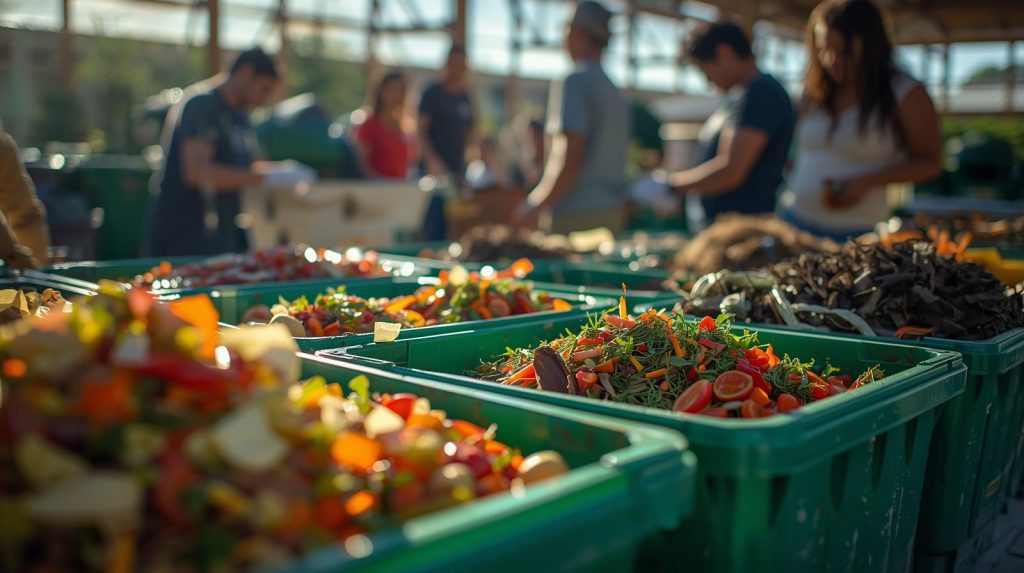
Site selection, permitting, and safety for urban composting hubs
Finding the right spot is key for a composting hub. Choose places that are easy for people to get to.
This could be community gardens, schoolyards, parks, or vacant lots.
These locations save time and encourage more people to participate.
Make sure there’s enough space for everything needed, like storing carbon and curing compost.
Choosing accessible, local locations
Look for a spot that’s flat and drains well. It should also have room for turning equipment.
Being close to public transport or bike paths helps reduce pollution.
If you’re working with a community garden, share resources like loading zones and tool storage.
For schools, plan around recess and service hours to avoid disruptions.
Regulatory considerations and city engagement
Get in touch with your health department and planning office early. Rules can vary a lot.
Some cities offer grants or have supportive policies, while others need permits or have limits.
City composting initiatives can provide valuable guidance.
Ask about rules, odor limits, and what materials are allowed before you start.
Site setup and safety choices
Decide how you’ll contain the compost. Options include bins, static piles, or in-vessel systems.
Good containment helps keep pests and runoff away.
Make sure to label all containers and post clear rules. Store small tools and personal protective equipment (PPE) safely for volunteers and staff.
Think about how people will access the site. Self-service 24/7 lets users drop off materials at their convenience.
Scheduled drop-off gives staff time to check loads and prevent contamination.
Use QR codes on signs to link to composting guidelines and contact information for reporting issues.
| Site Factor | Benefits | Considerations |
|---|---|---|
| Community garden | Nearby users, shared resources, ready outlets for finished compost | Space competition, need for clear rules, volunteer coordination |
| Schoolyard | Education opportunities, stable schedule, youth engagement | Safety around children, seasonal access limits, parental consent for programs |
| Park | High visibility, easy public access, possible municipal support | Permitting with parks department, vandalism risk, wildlife attraction |
| Vacant lot | Flexible space, room for scale-up, lower rent or lease costs | Site cleanup, security needs, possible zoning changes |
| In-vessel or contained system | Controls odors and pests, faster processing, good for dense areas | Higher capital cost, may need special permits, technical maintenance |
Use these tips for planning your urban composting project. Keep signs simple and train staff well.
Teach users how to sort materials and add carbon.
Work with planners and health officials to follow local rules.
This can also help you get support from city composting initiatives.
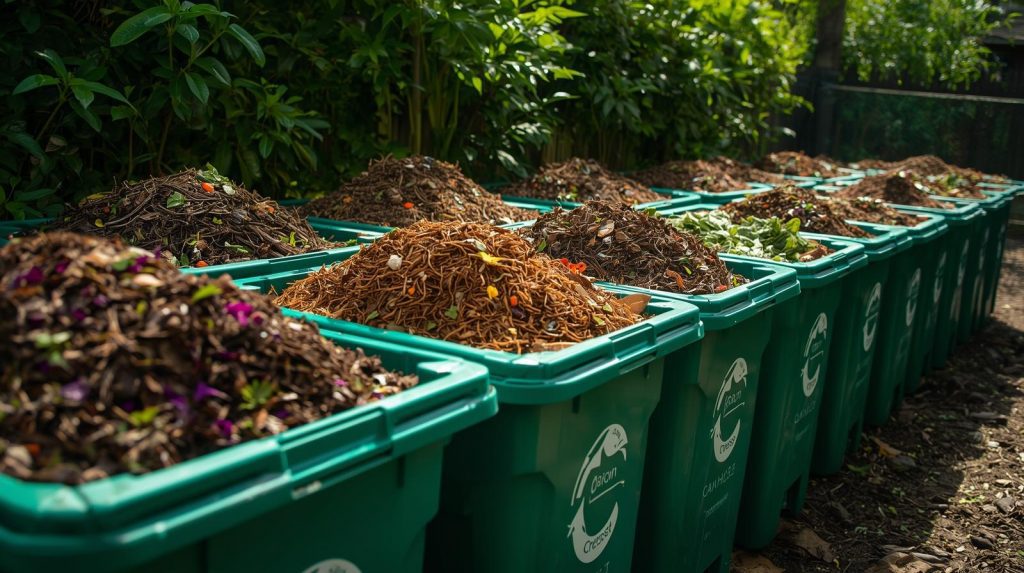
Collection systems, logistics, and materials handling
Good collection design makes a composting hub reliable and easy to use. Mix drop-off and pick-up services to fit neighborhood habits and budget.
Clear rules and simple staging help keep contamination low and compost quality high.
Drop-off and pick-up options
Drop-off hubs are cost-effective and work well near transit, markets, or parks.
Residents bring scraps easily when hubs are conveniently located.
Pick-up micro-haulers increase participation by removing transport barriers. They use cargo bikes, bike trailers, and small vans.
Choose vehicles based on scale, hills, and route length for efficient service.
Containers and labeling
Provide or require household containers that match site bins. Use color-coded labels and simple icons for easy sorting.
Add QR codes for rules and schedules.
Place leaf-bins or shredded paper near drop-off points. Ready carbon makes adding dry material easy and balances loads.
Staging, rotation, and feed management
Create a staging area for fresh inputs and curing bays. Use a linear or bay rotation for new material.
This avoids mixing fresh scraps with finished compost.
Monitor incoming loads for contamination and educate donors. Balance nitrogen-rich food waste with carbon to reduce odors and pests.
Small inspections keep the recipe steady and the operation predictable.
Logistics checklist
- Map convenient collection points to reduce missed pickups.
- Match vehicle type to route: short, flat routes suit bike hauls; longer routes need vans.
- Standardize bins and labels across the network for clear user cues.
- Set up a staging plan that supports continuous curing and predictable throughput.
Community engagement, partnerships, and volunteer management
Building a successful hub needs strong community ties and clear partnerships.
Start with a simple plan that lists local collaborators and volunteer roles. Use easy language so everyone can join easily.
Recruiting partners
Look for community gardens, public schools, and nonprofits like the Trust for Public Land.
City departments handling parks or sanitation are also good partners. They can offer land, volunteers, funding, and places for compost.
Volunteer training and roles
Define roles like site steward, collector, and educator. Use Master Composter courses and ILSR guides for training.
Keep it short, hands-on, and practical so volunteers feel confident after one shift.
Scheduling and retention strategies
Make schedules flexible to respect work and family. Offer small stipends, workshops, and recognition for volunteers.
Show results by using compost in gardens and sharing photos in newsletters.
Public outreach and communications
Use clear signs at drop-off points with simple rules. Add QR codes for more info.
List the hub on ShareWaste and share messages on social media.
Building a local composting network
Map nearby resources and share them with partners. This helps volunteers know where to go for tools and supplies.
A connected network reduces waste, increases resilience, and spreads best practices.
Supporting community environmental action
Make the hub a place for community action. Host open days, school visits, and workshops.
Hands-on experiences create ownership and a steady volunteer flow.
Volunteer composting programs: measuring success
Track volunteer hours, pounds diverted, and compost delivered. Share these with partners and funders. Seeing real impact boosts retention and attracts new partners.
Funding, revenue streams, and resource sourcing for startups and scale-ups
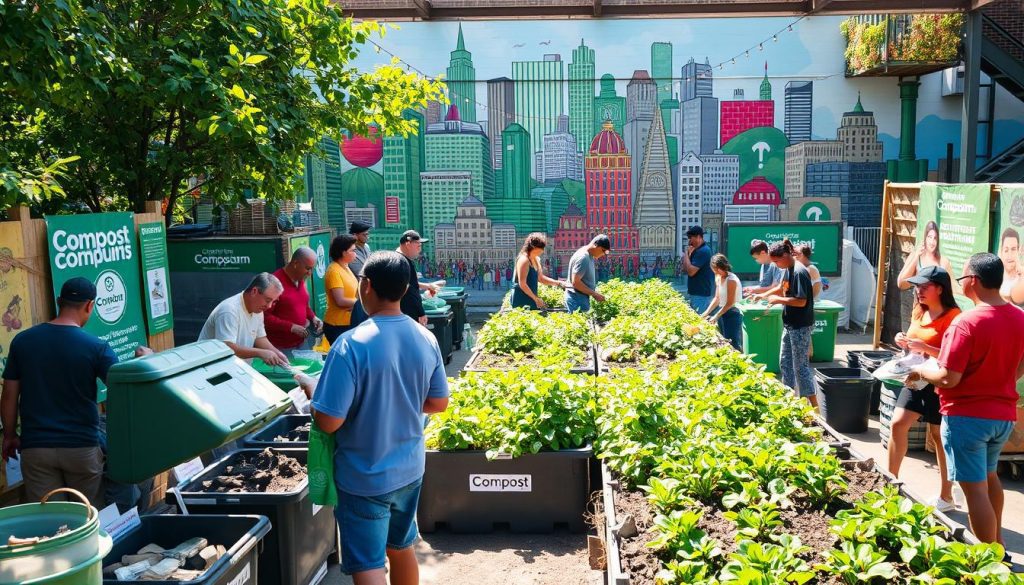
Starting a composting hub needs money, creativity, and local support. This guide helps find funding, earn income, and gather resources.
Keep things simple, track costs, and partner with local agencies and businesses.
First, look for grants and public programs. State agencies, community foundations, and the EPA offer grants for small projects.
Talk to your city’s sustainability team for help with equipment, land, or advice.
Use different funding sources to reduce risk. Grants can help with initial costs, while community fundraising supports ongoing work.
Local campaigns can attract donors and sponsors by showing clear benefits.
Earning income helps your hub become more stable. Set fair prices for compost sales to gardeners and landscapers.
Offer subscription services or host workshops to increase income.
Contracts with parks and schools provide a steady income.
Document your pricing, delivery, and quality to ensure clear expectations with partners.
Getting resources cheaply helps save money and supports sustainability. Look for donations from local groups and stores.
Organize leaf drives to collect carbon for year-round composting.
Secondhand markets and tool libraries offer affordable equipment. Contact tree-care companies and public works for wood or leaves.
These local sources reduce waste and costs.
The table below compares funding and resource options to help you choose between a startup and a scale-up.
| Option | Typical Funding or Value | Time to Access | Best Use |
|---|---|---|---|
| State and foundation grants | $5,000–$100,000; equipment, training, operating support | 3–6 months application cycle | Capital purchases, pilot staffing, training programs |
| Municipal support for composting | In-kind equipment, land access, and staff help | 1–3 months with advocacy | Site setup, long-term partnerships, scaling services |
| Community fundraising | $500–$20,000 from events or campaigns | Weeks to months | Initial operating costs, outreach, and small equipment |
| Compost sales | Variable; steady revenue once established | Immediately after the first harvest | Ongoing operations, seed for expansion |
| Service fees and contracts | Predictable monthly income | 1–3 months to negotiate | Stabilizing cash flow, institutional partnerships |
| Donated or secondhand equipment | High cost savings; limited cash outlay | Immediate to weeks | Startup gear, tool replacement, low-budget builds |
| Resource sourcing (carbon supplies) | Low cost; can be free | Seasonal coordination | Maintaining compost recipes and reducing odors |
Keep track of every dollar and resource. Good records help with grant reports and show partners your hub’s success.
Use smart pricing and mix revenue streams for long-term support.
Keep this guide close as you plan. With careful funding, steady income, municipal support, and smart resource use, your hub will grow into a reliable service.
Measuring impact and best practices for long-term success
To keep a community composting hub healthy and credible, you need clear ways to measure progress.
Start with simple logs and scales. Track what you can report to partners and funders.
Key composting metrics to record include weight or volume diverted, compost produced, participant households or sites served, volunteer hours, and an estimate of greenhouse gas avoided.
Use weekly or monthly sheets. A basic spreadsheet makes trends visible.
Below is a compact table you can adapt for monthly reporting. It helps compare inputs, outputs, and social reach.
Use consistent units so numbers add up across seasons.
| Metric | Unit | How to collect | Why it matters |
|---|---|---|---|
| Tons diverted | lbs or tons | Scale at drop-off or estimate by bin volume | Shows waste reduction and service scale |
| Compost produced | cubic yards or tons | Measure finished piles or use weight conversion | Demonstrates product yield and program value |
| Participant households | count | Registration logs or sign-in sheets | Indicates community reach and engagement |
| Volunteer hours | hours | Timesheets or online signups | Reflects social investment and capacity |
| GHG avoided | CO2e estimate | Use EPA or peer calculators linked to tons diverted | Translates diversion into a climate benefit |
Adopt best management practices from trusted resources.
The ILSR guides and Community-Scale Composting Systems offer SOP templates, safety checklists, and case studies you can tailor to local needs. Use these materials to build training and quality control into daily routines.
Make an iteration routine. Collect participant feedback, keep contamination logs, and study operational data.
Small changes to signage, bin labeling, and schedule can quickly lower contamination and improve turnout.
A reproducible system is easier to scale. Document bin rotation patterns, acceptance rules, and training scripts.
When your model is clear, municipal partners and neighbors can replicate it with less friction.
Measure, share, and refine. Reporting simple composting metrics builds trust.
Using ILSR guides and Community-Scale Composting Systems helps you follow proven best management practices while you adapt to local realities.
Check out our apparel store for this design and many, many more…

Conclusion
Starting a community composting hub in your city needs clear goals and a solid plan.
First, decide what you want to achieve. Do you want to educate people, reduce waste, improve soil, or create a business?
Then, pick the best model and size for your area. You could start small with a backyard co-op or grow bigger with a neighborhood drop-off.
Even a school can host a hub.
Next, get the right training, partners, and a good location. Make sure you have rules for quality control.
Set up a system for collecting waste that works for your community.
Keep contamination low by labeling bins clearly and setting simple rules. Get training from experts like the Institute for Local Self-Reliance and the US Composting Council.
The EPA also offers helpful guidance.
Get your neighbors involved by asking them to help out. You can list bins on ShareWaste or partner with a local garden.
Running a leaf-collection drive is another way to engage your community.
Look for grants and other ways to earn money, like selling compost. Using secondhand equipment can also save costs.
Track your progress to see how you’re doing and make things better.
Make sure to keep the compost local and involve your neighbors. Also, push for policies that support your efforts.
A community composting hub is a great way to manage waste, improve soil, and bring people together.
Every effort counts towards a greener future.