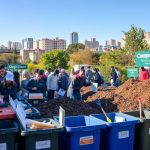
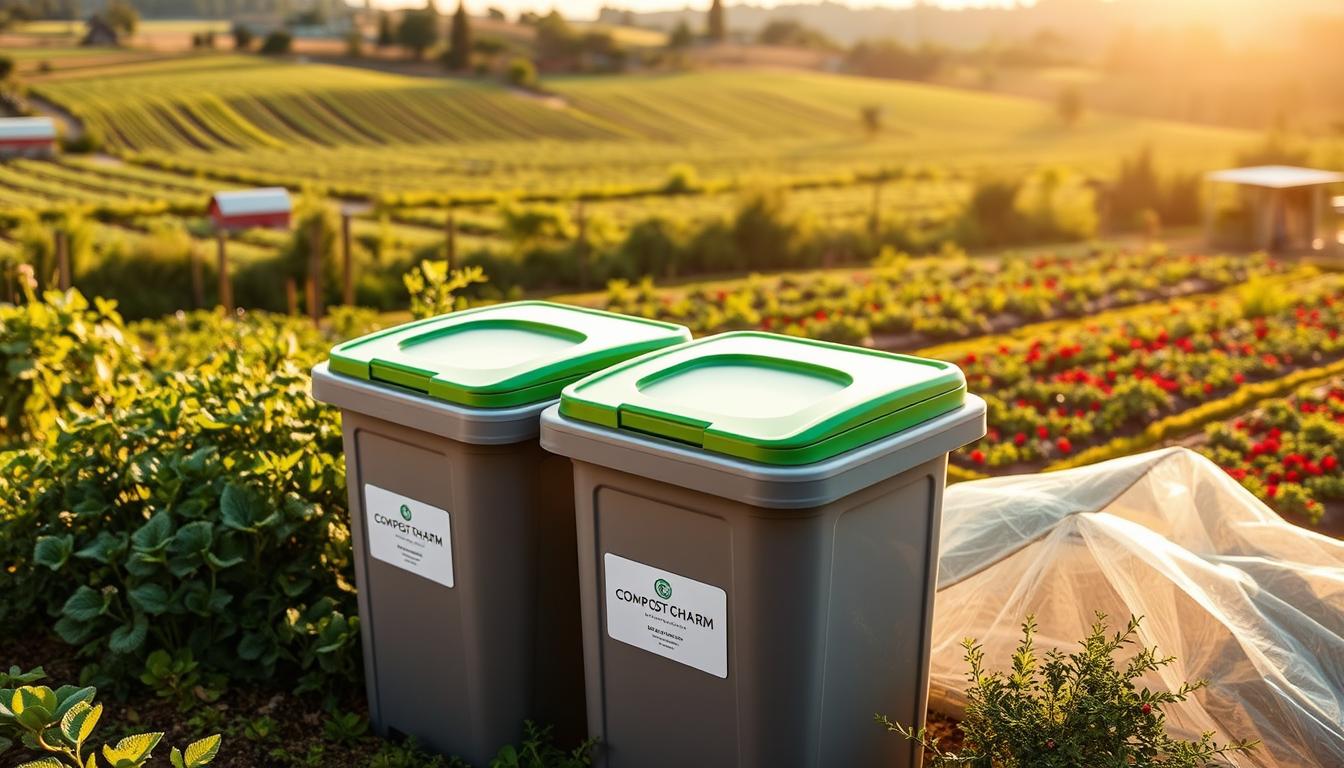
Neighborhood compost bins and local food cycles make recycling easy and visible. If you find home composting hard, community options are a clear choice.
They take food scraps, yard waste, and cardboard and turn them into compost.
This compost then feeds gardens, parks, and urban farms. The U.S. EPA suggests avoiding landfills for organic waste. It supports local and municipal efforts to keep nutrients close to home.
This approach reduces hauling, lowers emissions, and improves soil and watersheds. Groups like the Institute for Local Self-Reliance and Neighborhood Soil Rebuilders help scale impact.
They train people and set up local sites.
Real Food Farm and community projects in Washington, D.C., show success. They measure how much waste is diverted and compost made.
Community composting also teaches people of all ages.
In short, eco-friendly neighborhood initiatives are key. They use neighborhood compost bins and local food cycles.
This article will show you why these systems are important and how to get involved.
Key Takeaways
- Neighborhood compost bins offer an easy entry point for people unsure about home composting.
- Local food cycles keep nutrients and benefits within the community, reducing hauling and emissions.
- Federal guidance and local groups support scaling community composting with training and standards.
- Finished compost improves soil, supports urban gardens, and strengthens watersheds.
- Community programs double as education hubs and civic projects that boost resilience.
Why neighborhood compost bins and local food cycles matter for community sustainability efforts
Neighborhood compost bins keep organic materials close to where people live. This cuts truck miles and helps return nutrients to local soils.
Small-scale processing supports community sustainability initiatives by reducing emissions and keeping resources in the neighborhood.
Connecting organic waste management to local resilience
When a block or school runs a compost site, neighbors build skills in organic waste management. Programs like Master Composter training and Neighborhood Soil Rebuilders create local expertise.
This expertise helps gardens, parks, and urban farms stay productive in times of stress.
Environmental benefits: reducing landfill methane and sequestering carbon
Diverting food scraps from landfills cuts methane emissions, a major climate win. Compost added to soil boosts carbon sequestration and improves water retention.
This makes reducing carbon footprint through composting a clear climate action residents can take.
Social and economic benefits: jobs, education, and food security
Community composting generates local jobs and hands-on training. Youth-led collection pilots and bike-based pickup programs show how operations can hire locally.
Finished compost supports community gardens and urban farms, strengthening food access and local food cycles.
What community composting is and how it differs from home and commercial composting
Community composting collects food scraps and yard trimmings from kitchens, gardens, schools, and small businesses. It processes them close to where they were generated.
This keeps nutrients local, supports urban gardens, and creates learning sites.
Compost can be a finished material or the process of breaking down organic matter. Understanding both helps plan a site’s role.
It can be a processing station, a distribution point, or both.
Small-scale, distributed composting systems are for neighborhoods and institutions. They differ from big setups in scale, allowed materials, and management.
A backyard bin or community windrow can’t match a commercial facility’s capacity.
Municipal and industrial programs handle more volume and a wider range of items. They use mechanical turning and higher temperatures to meet standards.
Community programs rely on hands-on methods and local knowledge for smaller batches.
The ILSR principles guide community-based design. They focus on resource recovery, locally based loops, and returning organics to soils.
Projects following these principles are educational, equitable, and resilient.
Design choices should reflect local goals. A school garden program may focus on education and safe food sources.
Farmers’ market drop-offs stress convenience and local farm connections. Distributed systems match scale to need, reducing costs and distance.
Community-run programs need clear training, simple record keeping, and good hygiene.
Pairing volunteers with technical partners like Master Composter programs or city bureaus helps build strong programs.
Types of neighborhood compost bins and local food cycles available in urban areas
Cities have many ways to keep food scraps out of landfills. You can find a service that matches your schedule, space, and community goals.
Here are some common options that make composting in cities easy and support local food cycles.
Household drop-off points are great for busy homes. People bring their kitchen scraps to a nearby spot instead of dealing with bins at home.
Some areas pair this with municipal organic recycling programs for more waste.
Municipal organic recycling centers accept food waste and yard trimmings. These sites often have set days for drop-offs and offer education.
Always check local rules before you go.
Farmers’ market drop-off spots let vendors and shoppers leave scraps while shopping. Markets can have bins that feed local farms and gardens.
Many markets team up with co-ops to share costs and work together.
Co-op partnerships link retail, civic, and nonprofit groups. Co-op grocery stores might have bucket-swap models.
This means you swap a full container for a clean one, saving time and helping community sites.
Community garden and school garden piles turn waste into soil for raised beds. These gardens teach about nutrient cycles. They often welcome volunteers and occasional bulk drop-offs.
Public collection bins in parks, market areas, or near transit are easy to use. Programs like Project Oscar in Boston show how these bins can increase outreach and diversion.
Neighbor-to-neighbor sharing grows through apps and networks. Platforms like ShareWaste connect people who need a place to drop scraps with hosts. This creates reliable food cycles across neighborhoods.
Many cities use a mix of options. Curbside pickup, private services, market drop-offs, and digital networks can work together.
You can choose what fits your life and help local composting efforts.
| Option | Best for | Typical requirements | Benefits |
|---|---|---|---|
| Household drop-off | Individuals without backyard space | Short trip, sealed container | Low hassle, accessible |
| Municipal organic recycling | High-volume household and yard waste | City rules, scheduled hours | Professional processing, broad acceptance |
| Farmers’ market drop-off | Shoppers and vendors | Market hours, on-site bins | Supports local farms, immediate supply |
| Co-op partnerships | Co-op stores and frequent users | Membership or partnership agreements | Shared costs, steady inputs |
| Community & school gardens | Education and local food production | Volunteer labor, site management | Hands-on learning, direct soil benefits |
| Public collection bins | High-traffic public areas | Regular servicing, signage | Visible diversion, public engagement |
| ShareWaste & compost hosts | Neighborhood networks without formal services | App signup, host guidelines | Flexible, builds community ties |
How neighborhood compost bins support sustainable food production and urban gardening initiatives
Neighborhood compost bins start a cycle that makes city soils stronger and local food systems better. They turn food scraps into compost, which is great for gardens and farms.
This helps grow food in a way that’s good for the planet and makes gardening in cities more successful.
Compost makes soil better at holding water and nutrients. This means plants need less water and grow stronger.
Using compost is a smart way to add nutrients back into the soil in community gardens and small farms.
Compost is also good for fixing damaged or hard soils. It adds organic matter that helps soil life and can even clean up pollutants.
This is key for making old, empty lots ready for planting and growing food.
Places like Real Food Farm in Baltimore and Filbert Street Garden in Philadelphia see big benefits from compost.
They use it in their gardens and get better crops and healthier plants. This shows how compost can help grow food and take care of neighborhoods.
Here are common ways neighborhood composting links to productive green spaces:
- Amending beds to improve fertility and structure.
- Using compost as a top dressing to reduce erosion and retain moisture.
- Blending compost with local soils when remediating vacant lots to jump-start biological activity.
- Routing finished compost back to community gardens to close local food cycles.
Local programs often use simple, rat-resistant systems to process food scraps on-site. This keeps compost close to where it will be used.
It helps create a loop from kitchen to garden and strengthens neighborhood ties around food and soil care.
Below is a compact comparison showing how compost supports different urban uses and outcomes.
| Use | Primary Benefit | Typical Outcome |
|---|---|---|
| Community gardens | Improves fertility and supports crop yields | Higher vegetable production, teaching sites for gardeners |
| Urban farms | Builds soil structure for larger-scale production | Consistent harvests, reduced need for synthetic inputs |
| Remediating vacant lots | Rebuilds biology and binds contaminants | Safe, plantable plots and expanded green space |
| Stormwater and watershed benefits | Increases water infiltration and reduces runoff | Healthier local watersheds and reduced erosion |
| Local food cycles | Shortens distance between waste and use | Closed nutrient loops, community resilience, and lower transport costs |
Practical community models: successful urban composting programs and initiatives
There are examples that show how to scale up composting efforts. These programs use hands-on learning and local partnerships to turn food waste into compost.
They range from volunteer-led groups to city-wide networks that connect gardens and farms.
The Neighborhood Soil Rebuilders focus on training and neighborhood care. They combine classroom learning with hands-on experience.
This approach helps avoid problems and makes high-quality compost for local farmers.
The Howard University Community Compost Cooperative has a three-bin system to keep rats out. They’ve diverted almost ten tons of food waste and made about four tons of compost.
Their method and community leadership offer a model for others.
DC DPR Compost Cooperatives connect about fifty local groups through shared tools and standards. They use systems like Compost Knox to stay efficient and safe.
This network helps small sites share resources and improve quality.
Real Food Farm in Baltimore runs a five-bin system for areas with limited grocery stores. Their Compost Co-op supports nearly seventy members.
This shows how cooperatives can help achieve bigger food security goals.
Filbert Street Garden in Baltimore shows how youth composting creates jobs and skills. Their bike-powered pickup in Curtis Bay links education to business.
Similar programs, like BK ROT in Brooklyn, offer young people a chance to earn while learning about sustainable waste.
These examples share key elements you can adapt: clear training, cooperative leadership, safe systems, and measurable results.
They show different sizes and budgets can be matched to community needs.
| Program | Core Feature | Capacity / Outcome | Community Benefit |
|---|---|---|---|
| Neighborhood Soil Rebuilders | Hands-on training with local leaders | Small to medium-scale sites; reproducible curriculum | Builds stewardship and high-quality compost |
| Master composter programs | Structured volunteer certification | Trains dozens per cohort; improves site management | Reduces nuisances and raises compost quality |
| Howard University Community Compost Cooperative | Three-bin, rat-resistant system | ~10 tons diverted; ~4 tons finished compost | Campus-community nutrient cycling and training |
| DC DPR Compost Cooperatives | Networked cooperatives with modular systems | ~50 cooperatives using shared standards | Scales capacity and standardizes quality |
| Real Food Farm | Five-bin community compost system | Serves two food deserts; Compost Co-op of ~70 members | Supports urban farms and food access programs |
| Filbert Street Garden (youth-led compost collection) | Bike-powered pickups and workforce training | Local collection routes; youth employment pathways | Creates entrepreneurship and green jobs |
Managing challenges: best management practices, site security, and health considerations
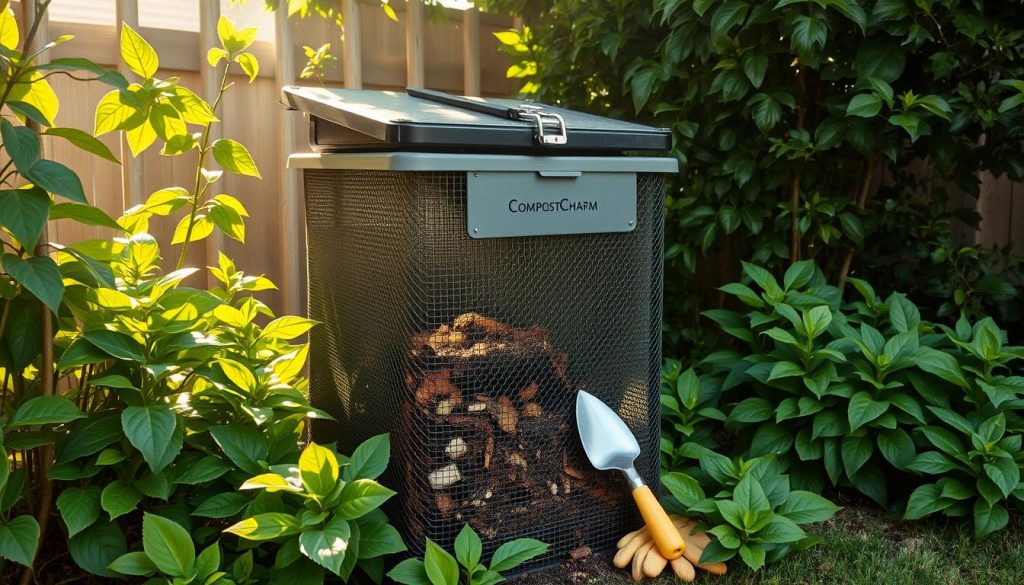
Starting a neighborhood compost site comes with its own set of challenges. You might worry about odors, pests, pathogens, and the hard work of turning and watching the piles.
By following the best management practices, you can reduce risks and gain trust from your neighbors.
Design is important. Using enclosed bins, tight lids, and elevated bases can keep rats out. Storing feedstocks and tools securely also helps.
Keeping records of temperatures, weights, and odors is key to meeting health standards and showing you’re following the rules.
It’s all about balance in the compost pile. Keeping the right mix of green and brown materials helps avoid odors and pests.
Working with local cafes, landscapers, and parks can help get the carbon you need. Adding a thick layer of finished compost or brown materials on top can also improve hygiene.
How many of volunteers you have affects what you can do. Simple schedules, clear tasks, and basic training from Master Composter programs can help.
Some sites even hire part-time staff to keep things running smoothly when volunteers are busy.
Site security is more than just fences. Make sure tools are locked up, bins are secure, and signs are clear. Regular checks help prevent problems and keep your site safe.
Here’s a quick guide to help you pick the right strategies for your site and resources.
| Challenge | Practical BMPs | Resource Needs |
|---|---|---|
| Rodent pressure | Rat-resistant composting, sealed bins, raised platforms, weekly inspections | Metal or heavy plastic bins, volunteer training, $500–$1,500 initial kit |
| Odors and pathogens | Manage greens/browns balance, monitor temperatures, use biolayer caps | Thermometer, cover materials, simple logs for temperature and odor |
| Carbon sourcing | Sourcing carbon in cities via partnerships with cafes, landscapers, parks | Outreach time, collection containers, pickup schedule |
| Labor and reliability | Clear small-scale composting BMPs, volunteer capacity plans, paid backup shifts | Training materials, shift rosters, small stipend budget |
| Site security | Lockable storage, signage, perimeter checks, local contact info posted | Locks, signage, volunteer or staff patrols |
Policy, municipal partnerships, and scaling local food cycles through public programs
Public programs are key for growing neighborhood composting. Local policies guide budgets, zoning, and outreach.
Simple rules help neighbors find drop-off points and join efforts with confidence.
Municipal organics collection and pilot drop-off programs
Municipal programs make composting easy. Cities like Boston tested bins through Project Oscar. This helped plan for wider use.
Pilot programs test routes and schedules. They refine plans before expanding. This ensures efficient collection.
How local policy can enable community composting and reduce truck traffic
Local policies can cut truck miles and costs. They focus on local processing. This keeps materials close and reduces travel.
Rules for community hubs near gardens help. They make collection more efficient and cost-effective.
Funding models, municipal–nonprofit–private collaborations, and pilot-to-scale pathways
Funding comes from various sources. This includes city budgets, grants, and user fees. Partnerships between cities, nonprofits, and private firms are common.
Universities and nonprofits play key roles. They bring expertise and trust. This helps programs succeed.
Pilot programs are training grounds. They teach best practices and prepare for growth. Grants and youth-run projects support these efforts.
Scaling up needs clear goals and teamwork. Partnerships make composting accessible and affordable.
This strengthens the local economy and makes composting a daily habit.
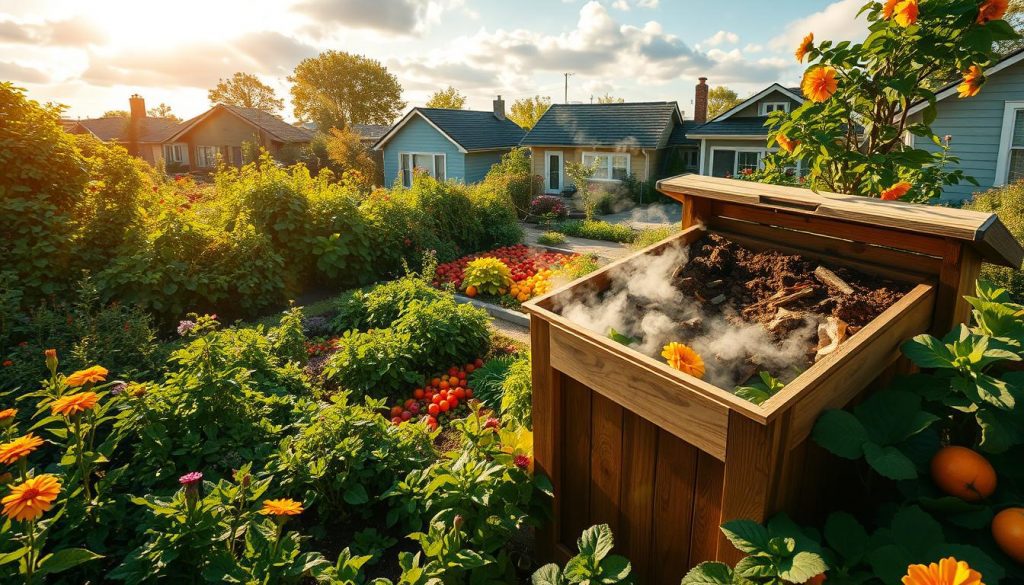
The success of a neighborhood compost program is clear in numbers and real-life stories. Use simple metrics to track progress and share stories of social outcomes.
These measures help you communicate with funders, neighbors, and city officials.
Metrics to track include tons diverted from landfill, compost produced, and truck miles saved.
These numbers help estimate carbon emissions avoided and compare sites over time.
Local economic indicators are powerful and easy to track. Look at job creation, youth stipends, and volunteer hours.
Also, note cost savings from reduced hauling and any compost sales or bucket fees.
Social outcomes show how composting strengthens neighborhoods. Measure food security, education sessions, and community events.
These activities build community engagement.
Use both short-term data, like monthly diversion rates, and long-term indicators, like cumulative tons diverted. Translate diversion into carbon emissions avoided using EPA frameworks.
Combine numbers with qualitative notes. Record partner visits, volunteer stories, and classroom outcomes. These stories add depth and explain community engagement shifts.
Present results in simple tables or monthly dashboards for clarity. Compare costs, job creation, tons diverted, and compost output.
This reveals the real trade-offs and benefits.
Keep data methods clear and consistent. Consistent metrics build trust, improve operations, and support funding requests.
How to start or join a community composting effort in your neighborhood
Start by checking out local services and talking to your neighbors. Look into curbside programs, private haulers, farmers’ markets, and garden sites.
Decide if a drop-off hub, cooperative pile, school project, or neighbor-host model is best for you.
Use apps like ShareWaste to connect with composting networks while planning. This can help you get started faster.
Before starting, check safety and rules. Make sure you follow local regulations and EPA guidelines.
Choose a spot that’s easy to get to, like a community garden or park plot.
Think about the design early on. A 3–5 bin system or a modular unit can make maintenance easier and protect neighbors.
Train your team with good curricula. Enroll them in Master Composter or Neighborhood Soil Rebuilders courses.
This will teach them about managing the pile, controlling pests, and monitoring temperatures.
Use ILSR toolkits for setup, governance, and tracking checklists. Keep training short and hands-on to build confidence.
Plan your tools and budget. You’ll need bins, screening tools, and a thermometer.
A good rat-resistant setup costs around $1,000. Create a budget for materials, signage, and safety.
Look for grants and partnerships to help with costs. Municipal grants, community foundations, and parks departments can be great resources.
Set up roles and governance early. Create clear volunteer materials that explain their duties. Use fees or subscriptions for cooperative systems.
Draft bylaws or agreements for rules and access.
Track basic metrics like diverted amounts, temperature checks, and compost volumes. Good data helps secure funding and shows impact. Use spreadsheets or a cloud folder for easy updates.
Grow your site by partnering with local programs and farms. Recruit volunteers through schools and community groups.
This keeps your site running smoothly and spreads skills.
To start, follow these three steps: choose the right model, train a team, and use resources like ILSR toolkits. Clear roles, simple budgets, and steady recruitment make your site strong and useful.
FAQ
What are neighborhood compost bins, and how do they fit into local food cycles?
Neighborhood compost bins are shared spots where people bring organic waste. This waste includes kitchen scraps and yard waste. The goal is to turn it into compost that can be used in local gardens and farms.
This process helps improve soil health and supports local food production. It also helps keep our waters clean.
Why do neighborhood compost bins and local food cycles matter for community sustainability efforts?
They help reduce waste sent to landfills, which cuts down on methane emissions. This also lowers the need for long truck trips.
By processing waste locally, we improve soil health and manage stormwater better. It also reduces pollution from hauling waste.
Community composting builds local knowledge and creates jobs. It boosts food security by providing compost to gardens and farms.
How does community composting connect organic waste management to local resilience?
It strengthens local food systems by adding nutrients to the soil. This makes urban farms and gardens more productive.
It creates a distributed system that’s less prone to failures. It trains residents in composting and supports small businesses and youth jobs.
What are the environmental benefits, specific to landfill methane and carbon sequestration?
Diverting waste from landfills reduces methane emissions. This is a potent greenhouse gas.
Compost improves soil structure and water retention. It also helps sequester carbon in the soil.
Processing waste locally reduces emissions from long-distance transport.
It creates jobs and apprenticeships and supports youth employment. It also engages volunteers and educates the public.
It supplies compost to gardens and farms, improving food access. Cooperative models generate revenue through bucket fees or compost sales.
How is community composting different from home composting or large municipal/industrial systems?
Community composting is community-scaled and distributed. It involves multiple small sites that accept local waste.
Home composting is individual and small-scale. Municipal systems are centralized and handle a wider range of waste.
Community systems focus on engagement and education, keeping benefits local.
What are the ILSR guiding principles for community composting?
Key principles include recovering resources and keeping processing local. They emphasize returning organics to soils and using community-scaled systems.
They also focus on engaging residents, educating them, and securing community support. These principles distinguish small-scale, locally embedded programs from centralized models.
What types of neighborhood compost bins and local food cycle models exist in cities?
Cities have various models, including curbside services and farmers’ market drop-offs. There are also municipal centers, co-op partnerships, and shared bins.
Platforms like ShareWaste connect donors with host sites. This connects neighbors and supports community gardens and urban farms.
How do farmers’ market drop-offs and co-op partnerships work?
Farmers’ market drop-offs offer convenient locations for leaving scraps. Co-op partnerships use bucket-swap or membership models.
Members pay fees, drop off buckets, and share finished compost. This combines convenience with shared governance and funding.
Conclusion
Community composting is a smart way to cut down on food waste. It helps make soil healthier and supports local food systems.
By using a neighborhood compost bin or joining urban composting, you help the planet.
Keeping food waste local has many benefits. It helps the environment, supports education, and creates jobs. This approach is key to neighborhood environmental efforts.
Guidelines from the federal government and EPA highlight the importance of composting. Cities like Washington, D.C., and Baltimore have shown success through partnerships and training.
Places like Howard University’s Real Food Farm and Filbert Street Garden demonstrate how small efforts can make a big difference.
Choose the composting model that works for your area. You can start with drop-off points, community gardens, or neighbor-hosted systems.
Use toolkits, ShareWaste, or local programs to get going. Your efforts will make neighborhoods greener and more resilient for all.