
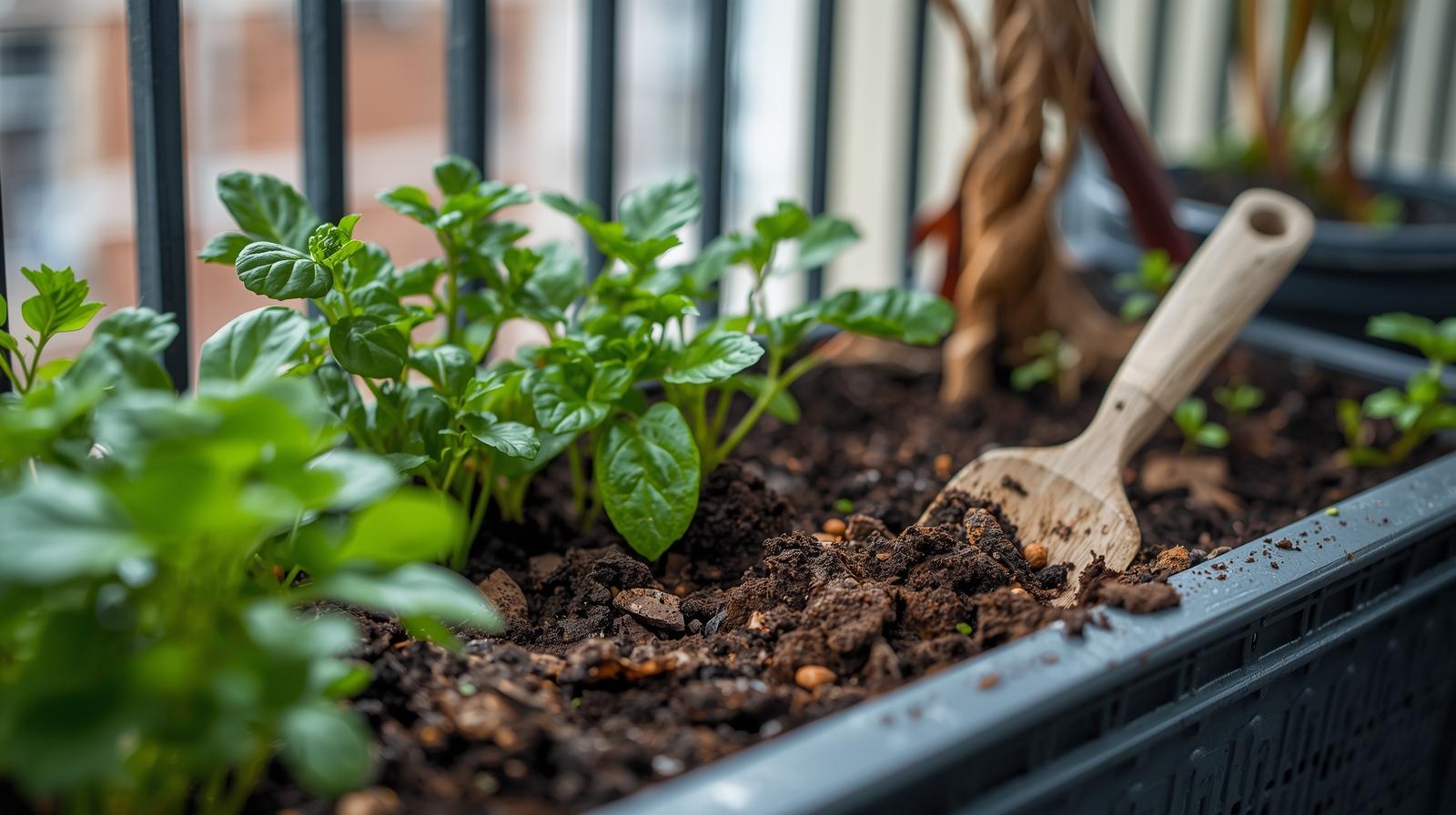
Urban composting tips for balcony gardeners
Composting on a balcony is doable and useful. Start with a compact bin like the Worm Factory or a Bokashi kit.
These bins reduce odor and speed up breakdown.
For a DIY option, use a sealed plastic bucket with a tight lid and drainage. This setup works well for balcony composting.
Balance “green” kitchen scraps with dry “brown” material like shredded paper or coconut coir. This mix keeps pests away and prevents smells. Weekly turning or aerating keeps the compost active.
Indoor composting is great for winter or tight spaces. Worm bins work well under a shelf or in a closet. Bokashi handles cooked food and returns a fermented mix for burying in a planter.
Use compost as a top dressing or mix it into potting soil at planting time.
Start with a small space composting guide and try one method for a few months. These tips help create a steady supply of rich material for sustainable balcony gardening.
Urban Composting Tips For Balcony Gardeners (Low-Odor, Easy Guide)
Ever wish your kitchen scraps could turn into plant food instead of bin slime? That is exactly what urban composting does for balcony gardeners.
With the right setup, your apple cores and coffee grounds become rich, dark compost that feeds your pots and planters.
Composting is just nature’s recycling system. Microbes and tiny creatures break down food and garden waste into crumbly soil that smells like a forest floor.
You do not need a big garden for this, only a bucket, a small bin, or a worm box. This guide will show you simple, low-odor, neighbor-friendly composting tips that work on balconies and in tiny flats, so your plants get a boost and your rubbish bags get lighter.
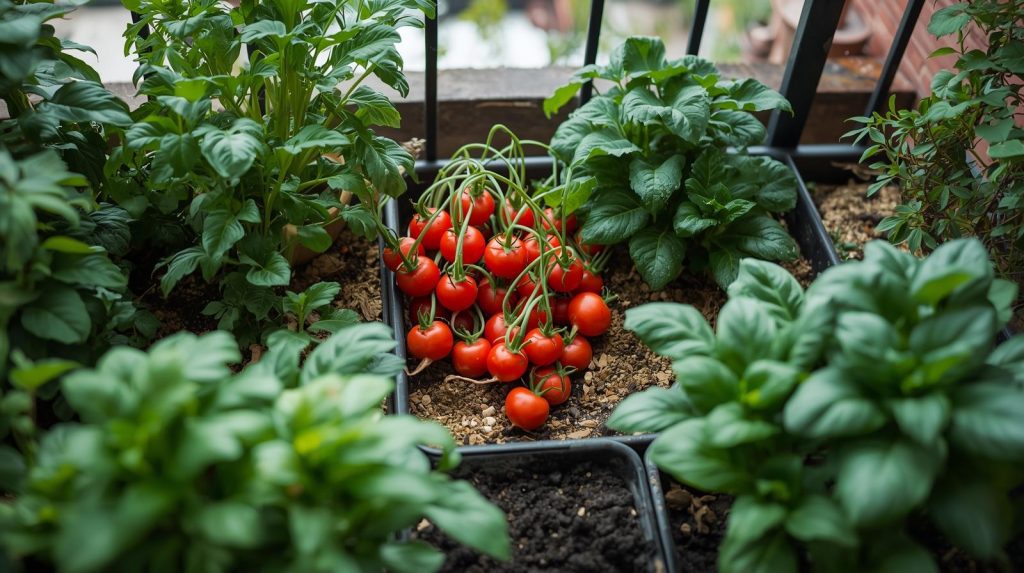
What Is Composting and Why It Helps Balcony Gardens
Composting means turning food and plant scraps into a dark, crumbly material called compost.
Little helpers like bacteria, fungi, and sometimes worms eat the waste, then leave behind nutrients your plants can use. Think of it as a slow, quiet kitchen for your soil.
For balcony gardeners, compost is powerful. Container soil can get tired over time. It dries out fast and can lose nutrients with every watering.
Adding compost helps pots hold water longer and gives roots a steady, gentle food supply. Your balcony compost becomes a kind of “vitamin mix” for your containers.
The basic science is simple. Microbes need four things: food scraps, dry materials, air, and the right amount of moisture.
Give them that, and they do the hard work for you. Even in a flat with no yard, you can use a worm bin, bokashi bucket, or compact composter to recycle scraps.
If you want another friendly overview of small-space options, the Moral Fibres guide on how to compost in a flat is also very helpful.
Urban composting reduces what you send to landfill, cuts smells from kitchen bins, and turns waste into something your plants love.
All in a space as small as a balcony corner.
Key benefits of composting for balcony and container plants
Urban composting brings clear wins for small space gardening:
- Richer soil in pots and planters, so plants grow stronger and greener.
- Less need for chemical feeds, since compost slowly releases nutrients.
- Better water holding in balcony compost mixes, so soil stays moist longer.
- Healthier roots, thanks to improved soil structure and helpful microbes.
- Money saved on bagged compost and bottled fertilizers over time.
Even a small tub of home compost can refresh tired potting mix and keep your balcony garden thriving.
Choosing the Best Urban Composting Method for Your Balcony
There is no single “right” way to make balcony compost. The best method depends on your space, how sensitive you are to smells, and how hands-on you want to be.
Most balcony gardeners do well with one of three options: vermicomposting, bokashi, or compact and electric composters.
If you like to compare choices side by side, the Compost Charm guide on 6 Effective Composting Methods walks through each system in more detail.
Vermicomposting on a balcony: worm bins for tiny spaces
Vermicomposting is composting with worms. Special compost worms eat your food scraps and turn them into worm castings, which is a fancy way to say very rich, natural plant food.
Worm bins suit balconies because they are small, quiet, and almost odor-free when managed well.
Many people find them fun, and kids often love checking on the “worm pets”.
Basic tips to start: use a bin with air holes, add bedding like shredded cardboard or paper, then add your worms. Feed small amounts of chopped fruit and veg scraps, coffee grounds, and tea leaves.
Keep the bin in shade, not in hot direct sun or freezing wind.
After a few months, you get dark, crumbly vermicompost. Mix a little into balcony pots when you repot, or sprinkle a thin layer on top of the soil.
Your plants will show their thanks with strong growth and deeper green leaves.
Bokashi buckets for fast, low-odor composting in flats
Bokashi is great for flats because it works in a sealed bucket and smells more like pickles than rubbish. You sprinkle a special bran that holds helpful microbes over your food waste.
The waste ferments instead of rotting.
A big bonus is that bokashi can handle things regular compost systems dislike, such as cooked food, small amounts of meat, and dairy.
That is perfect if you do not want to think too hard about sorting every scrap.
The basic process is simple. Add food scraps to the bucket, sprinkle bokashi bran, press everything down to squeeze out air, then close the lid tight.
Once full, let it ferment for a couple of weeks. The mix then needs to be buried in a planter, added to a larger compost bin, or combined with a worm bin to finish breaking down.
If you want a deeper look at how bokashi handles tricky scraps, Junk Bunk has a clear guide on compost made simple for flat dwellers.
The bucket fits under a sink, in a cupboard, or in a corner of the balcony, which makes it very flat-friendly.
Compact and electric composters for busy urban gardeners
Compact composters are small bins or tumblers that speed up decay by keeping scraps contained and often well mixed.
Some are hand-turned, and some are electric units that heat and grind scraps into a soil-like material within days.
These systems suit busy people who want quick results and do not feel ready for worms or bokashi. They are also good for buildings where outdoor bins or visible compost tumblers are not allowed.
Pros include speed, tidy appearance, and built-in odor control. Cons are higher cost and, for electric units, the need for power.
Still, for many apartments, a small tumbler or electric composter is the easiest path to regular balcony compost.
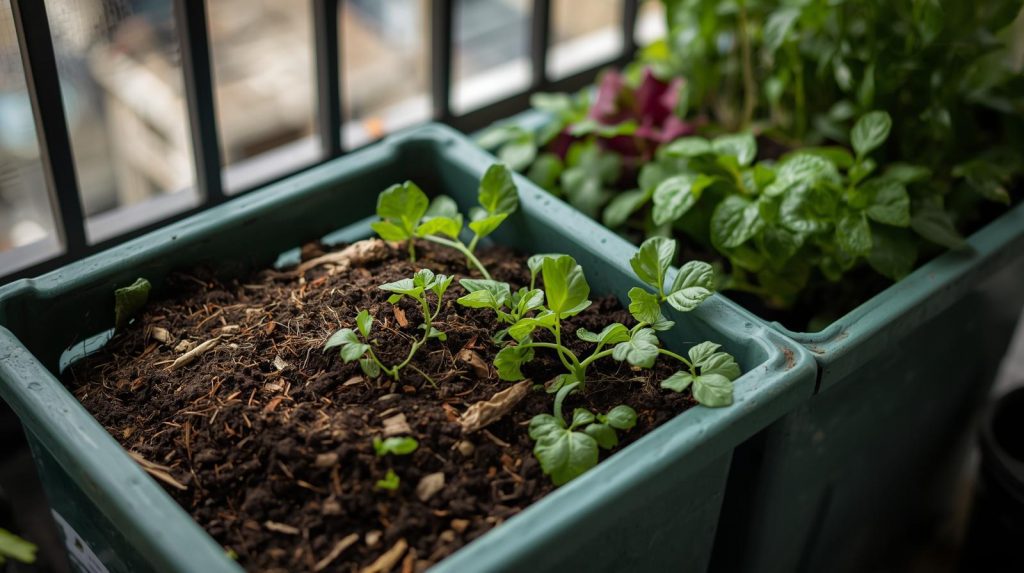
Step-by-Step Urban Composting Tips for Balcony Gardeners
Once you choose a method, daily habits matter. Good habits keep smells low, pests away, and neighbors happy. For a fuller beginner walk-through, you can also read Compost Charm’s friendly guide on Starting Composting at Home.
What food scraps and balcony waste can go in your compost
It helps to sort scraps into “greens” and “browns”.
- Greens are wet and rich in nitrogen; think fresh stuff.
- Browns are dry and rich in carbon; think paper and leaves.
Good greens for balcony compost:
- Fruit and veg scraps
- Coffee grounds and filters
- Tea bags and loose tea (avoid plastic-style bags)
- Wilted herbs and salad leaves
- Soft plant trimmings from balcony pots
Useful browns:
- Shredded cardboard and paper (plain, not glossy)
- Dead leaves
- Dry plant stems, torn into small pieces
- Paper egg boxes, ripped up
Avoid large amounts of meat, fish, oily food, pet waste, and glossy paper in regular bins. They can smell and attract pests.
If you use bokashi, you can include small amounts of meat and dairy, then let that system handle them safely.
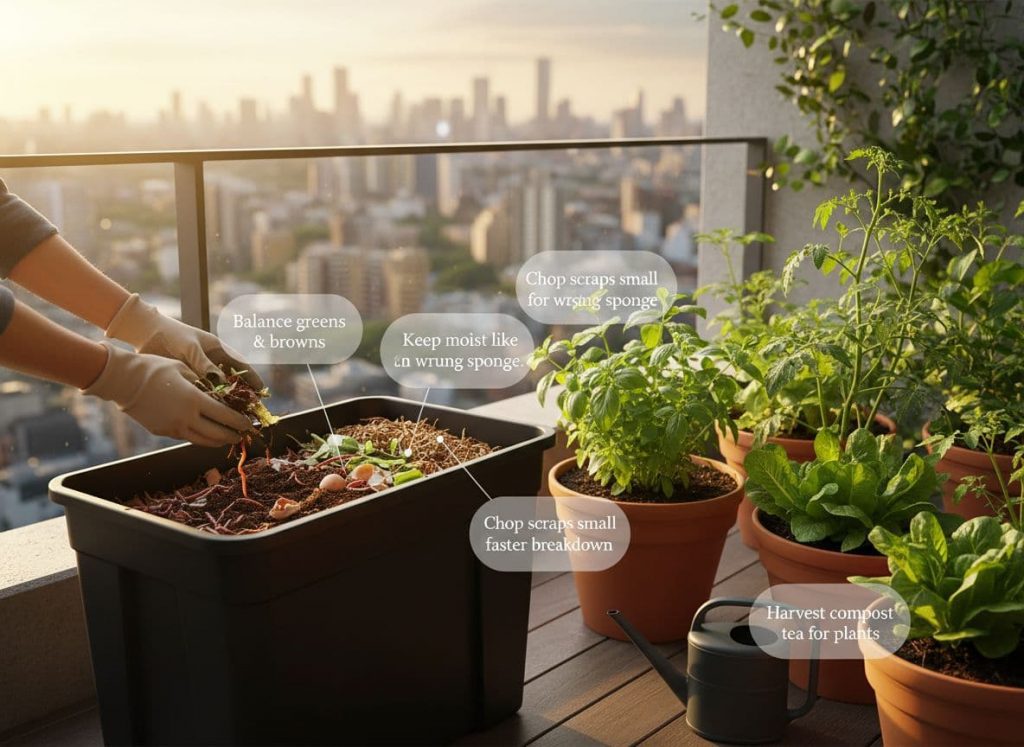
Chop scraps into smaller pieces where you can. Small bits break down faster, which is ideal for compact systems and small containers.
Keeping balcony compost clean, low odor, and bug free
A well-managed balcony bin should smell like soil or pickles, not rubbish. These simple habits help:
- Always cover fresh scraps with a layer of browns like paper or dry leaves.
- Keep lids tight and use a tray or saucer under bins to catch drips.
- Place bins in shade or light shade, not in hot sun.
- Mix or aerate when your system allows, such as turning a tumbler or fluffing a worm bin gently.
Aim for moisture like a wrung-out sponge, damp but not dripping.
- If the bin is too wet, add more dry browns and stir gently.
- If it is too dry, add a little water or more fresh scraps.
Be kind to neighbors too. Keep the balcony tidy, wipe up spills, and do not block shared paths. If someone asks about your bucket or worm bin, a quick explanation often turns curiosity into interest.
Many people are relieved to hear you are reducing waste, not storing rubbish.
For extra tips about helpful insects and how to keep pests away, you might later enjoy reading council-led advice on composting in small spaces.
How and when to use finished compost in balcony planters
You will know compost is ready when it is dark, crumbly, and smells earthy.
You should not see clear food pieces, though a few eggshell bits are fine.
Easy ways to use finished compost on a balcony:
- Mix into potting soil when you repot. Use about one part compost to three parts potting mix.
- Top-dress pots. Sprinkle a 1 to 2 centimeter layer on top of existing soil, then water well.
- Make a simple compost “tea”. Put a small scoop of compost in a bucket of water, stir, let sit for a day, then water your plants with the strained liquid.
Even small amounts of homemade compost can boost container health, making leaves greener and flowers brighter.
Conclusion: Small Balcony, Big Compost Impact
Balcony composting proves you do not need a garden to recycle food waste and grow lush plants.
By picking the right method, such as worms, bokashi, or a compact bin, and by managing scraps with a few simple rules, you can keep your balcony clean, low odor, and very plant-friendly.
Even a few handfuls of home compost can refresh potting soil and reduce what you send to landfill.
Key takeaways for balcony composters
- Start small with one bin or bucket that fits your space.
- Balance “greens” and “browns” to keep smells low and microbes happy.
- Keep bins shaded, closed, and tidy to avoid pests and neighbor worries.
- Use finished compost often in small amounts to feed balcony plants.
Quick FAQ for balcony composters
Will my balcony compost smell?
Not if you run it correctly. Cover fresh scraps with dry browns, keep lids tight, and avoid lots of meat or oily food in regular bins. Bokashi smells more like vinegar or pickles than rubbish.
Can I compost without worms?
Yes. You can use bokashi, a compact tumbler, or an electric composter. Worms are great, but they are only one of several urban compost options.
Is composting safe in an apartment?
Yes, when you use sealed bins and follow basic hygiene. Treat your compost bin like another kitchen tool, and keep the area clean and dry.
How long does composting take on a balcony?
It usually takes from a few weeks to several months, depending on the method and temperature. Electric units are fastest, then hot compact systems, then worm bins and bokashi finishing.
If you are unsure what to do next or run into a problem, you can ask the friendly composting FAQ bot on Compost Charm for quick, tailored help any time.