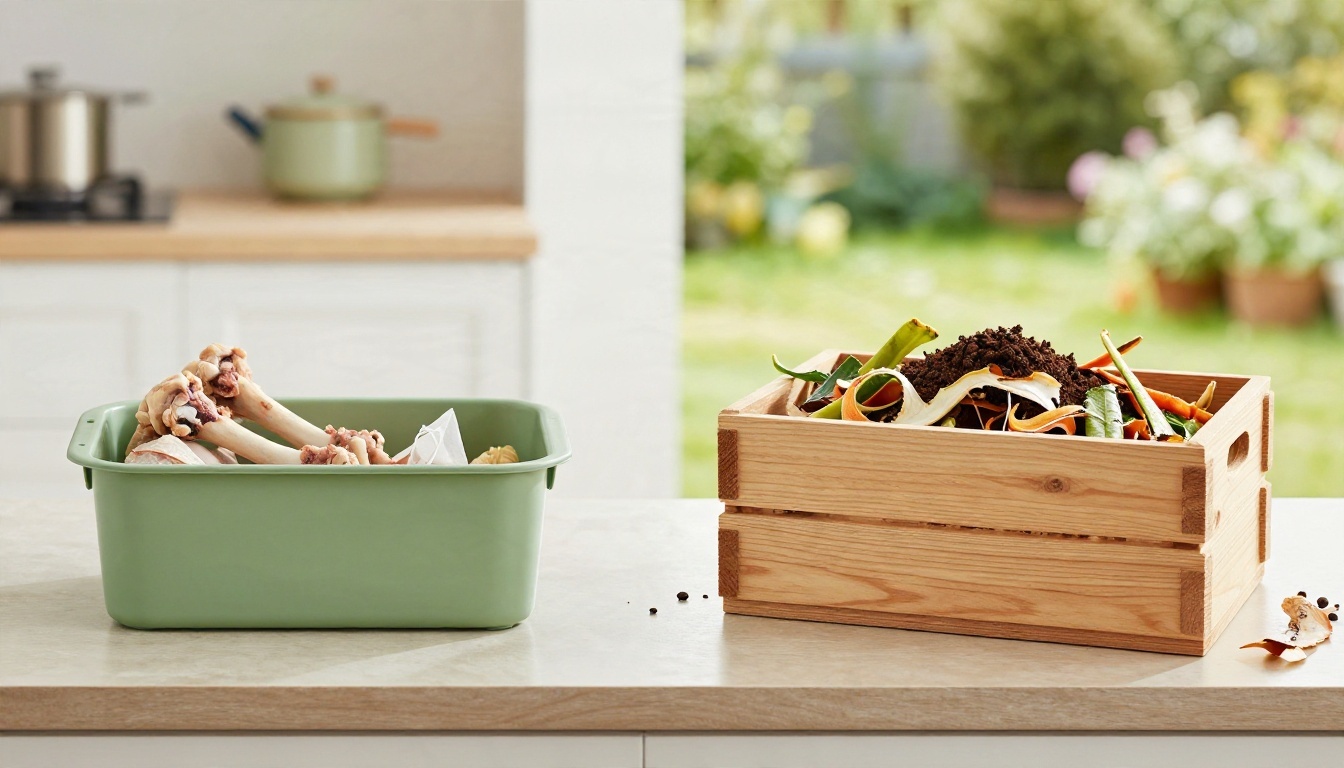
Vegetable peelings, a chicken bone and a tea bag all need clearing away. Should they go in your garden compost bin or the council food waste caddy?
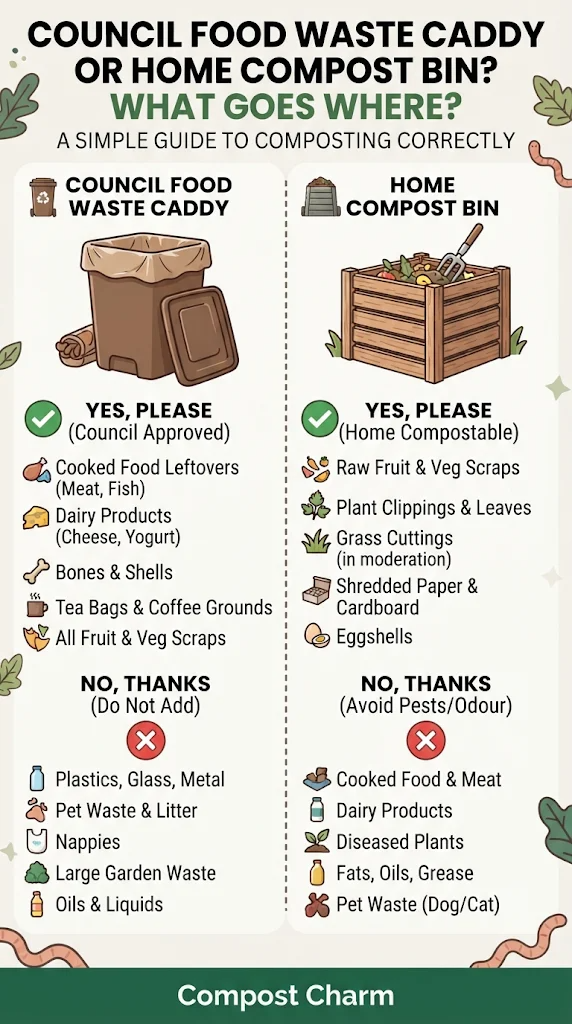
Put raw fruit and vegetable scraps, coffee grounds and loose tea leaves in a home compost bin if you have room. Use the council food waste caddy for accepted leftovers such as meat, bones, dairy and cooked food. Council Food Waste rules vary by area, so your council’s list takes priority.
Composting turns suitable organic material into a dark, crumbly soil improver and keeps suitable scraps out of landfill. You can compost at home and use the council collection too, giving you a place for a wider range of scraps.
Key takeaways
- Home compost bins work well for raw fruit and vegetable scraps, garden waste and other suitable plant materials.
- Local collections often accept meat, fish, bones, dairy and cooked leftovers.
- Your council’s accepted-items list is the final word on what goes in its caddy.
- A healthy compost heap needs a balance of moist, soft materials and dry, woody ones.
- Specialist systems, including vermicomposting and compost tumblers, may have different instructions from a basic garden heap.
Three quick questions to help you sort scraps
Before you throw food away, check whether it can still be eaten. Planning meals and using leftovers helps prevent waste in the first place. Our Don’t Toss It campaign has more ideas for making good use of food.
If food is no longer suitable to eat, ask yourself:
- Can it go in my home compost? Raw plant scraps are often a good fit, provided your bin has space.
- Will my council collect it? Check the local list, especially for cooked food, packaging and liners.
- Which option suits this scrap best? Use your garden bin for suitable ingredients and your caddy for accepted food waste that you cannot compost at home.
This guide covers an ordinary garden compost bin or heap. Wormeries, Bokashi systems and hot composters work differently, so follow the instructions for your setup.
What has changed in England?
Under the Environment Act 2021 and Simpler Recycling, councils in England must provide a weekly food waste collection from 31 March 2026, unless an agreed transitional arrangement allows a later start. This requirement applies in England. Waste collection arrangements differ in Scotland, Wales and Northern Ireland.
If your collection has not started, check your council website for its planned rollout date. If you already make compost at home, you can keep doing so and use the council service as well.
Keeping food scraps out of landfill can reduce greenhouse gas emissions linked to climate change.
Separately collected scraps may be treated through anaerobic digestion, which can produce biogas. Treatment routes vary by council, and better sorting can support recycling rates. The GOV.UK guidance on household waste collections explains the requirements.
A simple guide to what goes where
The council column below gives general guidance, not a guarantee. Local services differ, so check your council’s accepted-items list before putting anything in the caddy.
| Food or material | Home compost bin | Council food waste caddy |
|---|---|---|
| Raw fruit and vegetable peelings | Usually suitable | Usually accepted |
| Apple cores and vegetable trimmings | Usually suitable | Usually accepted |
| Coffee grounds | Suitable; mix with other materials | Usually accepted |
| Loose tea leaves | Suitable | Usually accepted |
| Tea bags | Check the bag, or empty out the leaves | Usually accepted, but check locally |
| Eggshells | Suitable; crush them first | Usually accepted |
| Meat, fish and bones | Keep out of a basic garden heap | Usually accepted |
| Cheese and other solid dairy leftovers | Keep out of a basic garden heap | Usually accepted |
| Cooked rice, pasta and plate scrapings | Keep out of a basic garden heap | Usually accepted |
| Bread, cakes and pastries | Best left out of a beginner’s heap | Usually accepted |
| Milk, drinks and liquid cooking oil | Keep out | Keep out; liquids such as milk and cooking oil are usually excluded from council collections |
| Plastic wrappers, trays and produce stickers | Keep out | Keep out |
| Grass, leaves and garden prunings | Suitable when mixed well | Keep out unless your service combines food and garden waste |
Recycle Now offers general advice on food waste recycling and home composting.
A handy rule is to save raw plant scraps from food preparation for your garden bin, then put accepted mixed leftovers in the council caddy. That way, you won’t need to pick through a bowl of dinner scraps later.
Help your garden compost break down
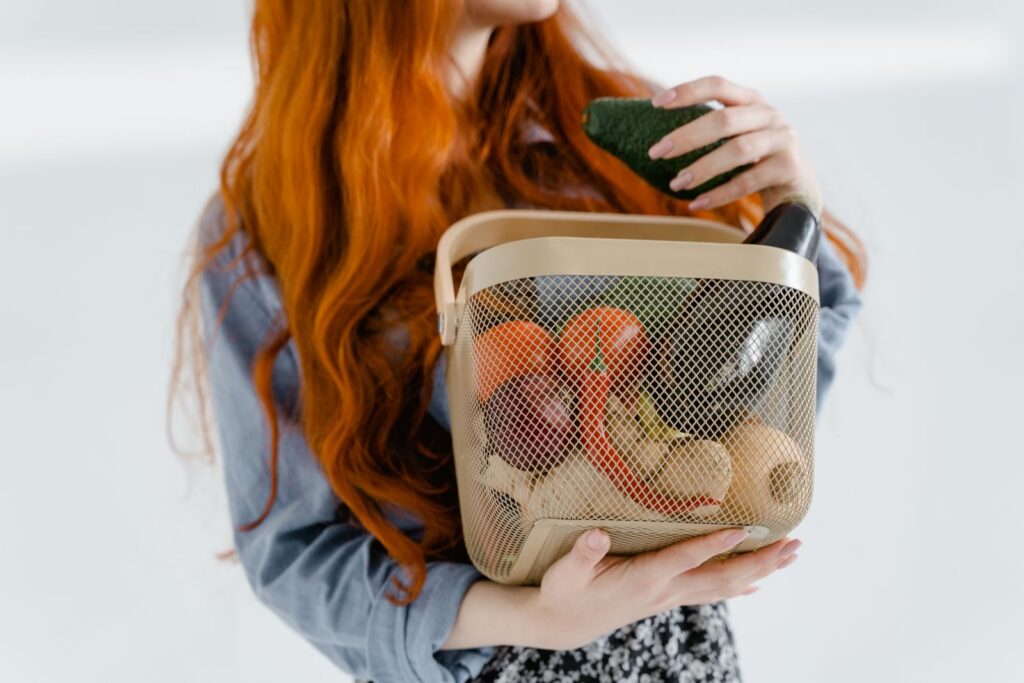
A heap made only of wet kitchen scraps can turn soggy and compacted. Add dry materials such as fallen leaves, torn plain cardboard or small pieces of woody garden waste to balance the mix.
Start with roughly equal volumes of soft, green materials and dry, brown ones. Adjust the mix as the compost changes. If it smells unpleasant or feels wet and packed down, add more dry material and turn or loosen it to let air through. If it stays dry and barely changes, check its moisture and mix the contents.
Cut large pieces into smaller ones so they break down more easily. You don’t need to chop every peel into tiny pieces, though. Remove stickers, tape and packaging before adding anything to the heap.
A basic compost bin needs air as well as a suitable mix of materials. The RHS explains that a balanced blend and enough airflow usually remove the need for bought compost activators. Read its composting advice for more detail. Mature compost improves soil, but it isn’t a complete fertiliser.
Keep a small covered tub of torn cardboard near your bin. When you add wet scraps, you’ll have dry material ready to hand.
Choosing a composting system
A regular compost heap or bin suits many gardens, but it is not the only option. Your available space and the kinds of scraps you want to process can help you choose a method. Our guide to six effective composting methods compares several approaches.
A compost tumbler is a sealed container that you turn to mix its contents. It can be easier to turn than a heap, and its enclosed design may help keep pests out. It still needs a suitable balance of materials, and it can become wet or smelly if you add too many food scraps without enough dry matter.
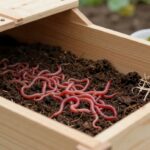
Vermicomposting uses composting worms to break down suitable food scraps. A wormery can work well where garden space is limited, including some patios and balconies. However, worms need care and a suitable environment, so follow the instructions for your wormery rather than treating it like an ordinary garden heap.
Whichever system you choose, check what it can handle before adding meat, dairy or cooked food. A specialist setup may accept materials that a basic garden bin should avoid, but instructions vary.
Make your council caddy easy to use
Place the kitchen caddy somewhere handy while you cook and clear plates. A convenient spot makes it easier to sort scraps before they end up in the wrong bin.
Try this simple routine:
- Keep a small container with a lid near your food preparation area.
- Move scraps to the outdoor caddy regularly.
- Empty the kitchen caddy before it becomes difficult to carry or close.
- Wipe up spills, clean the rim and keep the lid shut.
- Keep the outdoor caddy covered between collections. Check your collection day and follow your council’s advice for securing the outdoor food waste bin.
Wash the kitchen caddy with warm water and mild dish soap. For odours, add a little baking soda, rinse it well and let it dry before reuse.
You don’t have to wait until the caddy is full. Even a small amount of accepted scraps is worth putting out for collection.
If you live in a flat, take scraps to the shared communal bin and follow the instructions for using the food waste bin. If you have a missed bin, follow your council’s instructions.
If you want to keep suitable scraps for your garden bin, use a washable bowl for raw vegetable trimmings while you cook. Put those scraps into your compost afterwards, then use the caddy for accepted plate leftovers.
Recycle Now also has advice on food caddy care and collection.
Check the rules before buying liners
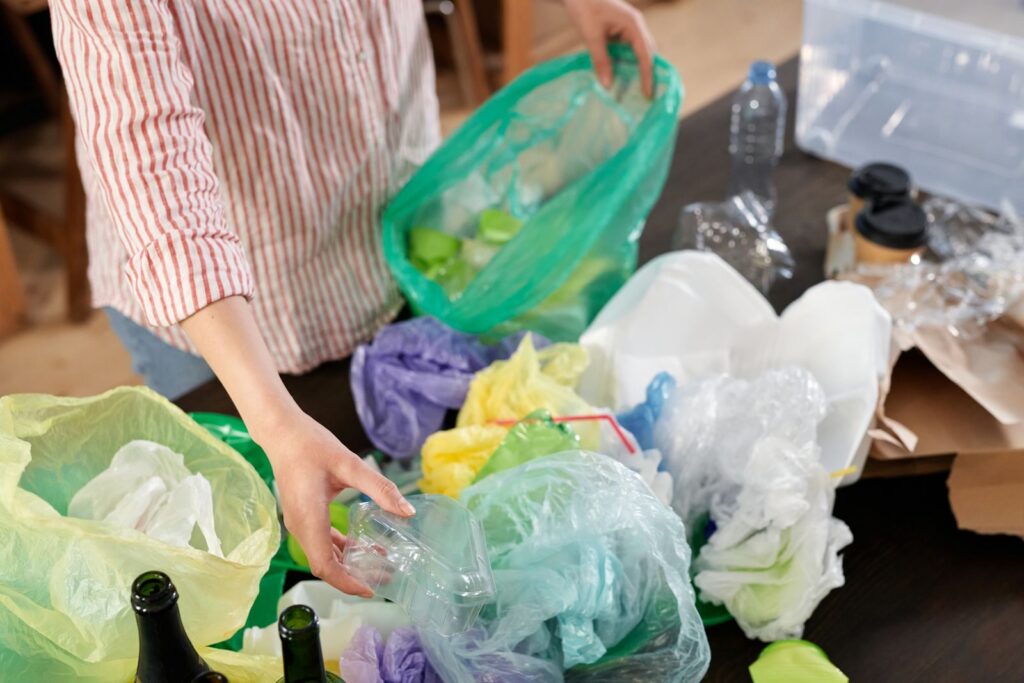
Councils do not all give the same advice about caddy liners. Some accept compostable liners, some prefer paper, and others allow food waste without a liner.
A liner accepted by your council may not suit a garden compost bin. “Industrially compostable” means it needs the conditions found in an industrial composting facility. “Home compostable” means it’s designed to break down in a suitable home system, but you should still follow the product and bin guidance.
The same rule applies to compostable takeaway packaging. It doesn’t automatically belong in your food waste caddy. For example, Cornwall Council accepts food scraps but excludes compostable takeaway cups, plates and bowls. Its food waste recycling instructions explain what its service accepts.
Check your local rules for caddy liners before buying a large pack, and find out whether your council allows an unlined caddy. You may find that rinsing it after emptying works well.
Take a closer look at tea bags
Tea leaves make a useful addition to a home compost bin. Check the bag itself, as some contain materials that don’t break down fully in an ordinary garden heap.
Look for a clear home-compostable label. If you’re unsure, open the bag and add the leaves to your compost. Dispose of the empty bag according to your council’s instructions. They are commonly accepted in council food waste collections, but check your local rules.
Recycle Now has more information in its tea leaf recycling guidance.
What if your garden bin is full?
Use the council caddy for accepted kitchen scraps while your compost matures. Keep garden waste separate unless your council specifically says that its collection takes both food and garden waste.
If your bin fills up regularly, a second bin may help. You can fill one while the other finishes breaking down. Choose a position you can reach easily, and make sure you have room to turn or empty the bins.
There is no need to force more scraps into an overflowing heap. A full bin needs time and space to finish.
A Sunday lunch clear-up
After a family meal, you could sort the scraps like this:
- Carrot peelings and cabbage trimmings go into the garden bin, with some dry material.
- Chicken bones, gravy-covered potatoes and leftover stuffing go into the council caddy, if your council accepts them.
- Plastic wrapping goes into the correct packaging recycling or rubbish bin.
- Liquid gravy follows your council’s advice for liquids. Do not pour a bowlful into the caddy.
If other people at home are unsure, stick a short list of familiar examples near the bins. A few clear reminders can make sorting easier for everyone.
Start with one small change
Check your council’s food waste page and note which foods it accepts, what it says about liners and when collections take place. Then put the kitchen caddy somewhere convenient and keep a separate bowl for suitable scraps you want to compost at home.
If you are new to the process, our guide to starting composting at home walks through the basics. You can also use the Composting FAQ Bot for answers tailored to your experience level.
Summary
Home composting and council food waste collections can work side by side. Add suitable raw plant scraps and garden materials to a well-balanced garden heap. Use the caddy for accepted meat, dairy, cooked food and mixed plate leftovers.
Check local rules for bags, liners, liquids or packaging. If your compost bin is full, let it finish and use the council collection for suitable scraps in the meantime.
Frequently asked questions
Can I use my home compost bin and council food waste caddy?
Yes. Keep suitable raw plant scraps and garden waste for your compost, then use the council caddy for accepted food waste you cannot compost at home.
Can meat and bones go in a garden compost bin?
Keep them out of an ordinary garden heap. Your council may accept meat, fish and bones in its food waste collection, so check its list.
Can I compost cooked food?
A basic home compost heap is not the right place for cooked leftovers. Put them in the council caddy if your local service accepts them.
Are all tea bags suitable for home composting?
No. Some contain material that may not break down in a normal garden bin. Check for a home-compostable label, or empty the leaves into your compost and follow local guidance for the bag.
Is a compost tumbler the same as a regular compost bin?
Both can make compost, but a tumbler is a container you turn to mix its contents. Follow its instructions, as its capacity and suitable materials may differ from an open heap.
Can I compost with very little garden space?
Yes. A small bin or a wormery may suit a patio or balcony, depending on the space and materials available. Vermicomposting uses worms, so choose a suitable wormery and follow its care instructions.